Small business owners have a number of options on how to organize their business for tax purposes. And if you sell items on eBay or Esty, drive for Uber, or offer your services as a writer or programmer, you are probably considered a flow-through entity in the eyes of the IRS. Frankly, so much of individual tax is paid by these small businesses, it is important for all taxpayers to understand this tax code logic.
How pass-through entities work
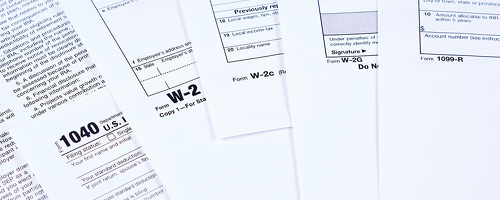
Pass-through entities do not pay taxes with a separate business tax return. Instead, the business’s taxable income is reported on the owner’s individual tax return. A sole proprietor does this on their Schedule C, while other entities like partnerships and S corporations send owners their respective share of profits via a K-1 tax form.
Generally, business owners prefer pass-through entities because:
The business income is taxed once instead of twice as in the case of C corporations.
The business format provides owners a level of legal protection that is not available by doing business as a sole proprietor.
What you should know
Individual tax rates. Changes in individual tax rates have an impact on the amount of tax paid by all small businesses that are organized as pass-through entities.
20 percent QBI deduction. A 20 percent qualified business income deduction is available for pass-through entities and sole proprietorships. There are limitations and other complexities involved, but the bottom line is many small business owners will see a tax break due to this deduction.
Owing the tax and having money to pay it can be a problem. Small pass-through business owners must pay income tax on their share of business profits. However, the business entity is NOT required to distribute cash from the company to help pay the tax. So pass-through owners could see a tax bill without money to pay the tax.
Concerns for minority shareholders. Minority shareholders in pass-through entities are doubly cursed. They not only may not receive distributions to pay taxes due, but they are often precluded from selling their shares, and they do not have enough ownership to require distribution of funds through shareholder voting.
Popular business entity type. According to statistics from the IRS, the S corporation formation is a popular business entity type with 5.1 million S corporations in 2021 – roughly three times the amount of C corporations. LLCs are quickly becoming the new entity of choice with growth from 120,000 in 1995 entities to over 21.6 million entities in 2025.
LLC is not a tax entity choice. If you are in an LLC you can choose how you wish to be taxed; either as a partnership or a corporation. So review your choices and make the decision that best fits your needs.
Understand how FICA and other tax rules apply to your business. When making a pass-through election or change for your business, understand how Social Security, Medicare and benefits are taxed and made available to your business. Understanding this can really impact how your business is taxed. For instance,
Partners in a partnership cannot make pre-tax contributions to a Health Savings Account.
Company provided health care is treated as a guaranteed payment to partners, since they are not considered employees.
FICA is not paid on S-corporation earnings as long as owners take a reasonable salary.
With 95% of small business entities being taxed on personal tax returns, it is important to understand that raising individual tax rates is really an increase in tax to most businesses in the United States. And given the diverse tax rules around these different pass-through entities, it makes sense to periodically review your business to ensure your entity choice still makes sense.
Acquire proactive guidance for business growth and profitability. Our expertise guides you through financial changes, helps you seize growth opportunities, refines your focus on future goals, and provides insights to enhance your decision-making.